
What Does Estate Management Do in Nigeria
Estate Management in Nigeria is much more than the buying and selling of land or buildings. It is a professional field that focuses on keeping properties functional, profitable, and compliant with the law. From residential estates in Abuja to commercial complexes in Lagos, estate managers play a crucial role in maintaining value and ensuring that every property serves its intended purpose.
For property owners, estate management means security and steady returns on their investments. For investors, it offers insights into property value, development opportunities, and market trends. And for students or young professionals, it opens doors to a career that connects business, construction, law, and urban planning.
This article explains what estate management truly involves in Nigeria. It explores the main roles and responsibilities of estate managers and shows why the profession is vital to the country’s growing real estate and urban development landscape.
Understanding Estate Management in Nigeria
Estate Management in Nigeria is the organized process of administering and supervising land and buildings to maintain their value and usefulness. It covers all types of property, from private homes and business spaces to farmland and public estates. The goal is to ensure that every property remains profitable, safe, and suitable for its purpose while following the laws that govern land and property in Nigeria.
An estate manager’s work involves combining technical knowledge, business insight, and legal awareness. They plan how properties should be used, monitor their condition, and ensure that owners get the best possible returns from their investments. This includes overseeing rent collection, managing repairs, coordinating with tenants, and keeping records for financial accountability.
In Nigeria, effective estate management also means understanding the country’s property regulations and land policies. Laws such as the Land Use Act set out how land can be owned and developed, and estate managers must ensure full compliance to protect both owners and tenants.
Overall, estate management acts as the link between property ownership and value creation. It turns physical assets into sustainable investments that support both individual wealth and national development.
Core Roles of Estate Management in Nigeria
Estate Management covers several key areas that keep properties valuable, functional, and well-regulated. Each role plays an important part in maintaining a healthy and profitable real estate environment across Nigeria.
Real Estate Valuation and Appraisal
One of the most recognized functions of estate management is property valuation. Estate managers assess the market worth of land and buildings for purposes such as sales, leases, mortgages, or insurance. Accurate valuation helps buyers, sellers, and investors make informed decisions and supports financial reporting for businesses and institutions.
Property Development and Construction Management
Estate managers often guide property development from planning to completion. They supervise designs, construction quality, and adherence to government regulations. Their goal is to ensure that each project meets safety standards, environmental expectations, and the owner’s financial objectives.
Property Sales, Leasing, and Rental Management
This role focuses on helping clients buy, lease, or rent properties while maintaining healthy relationships between owners and tenants. Estate managers handle marketing, negotiations, and lease agreements, and they make sure rental income is collected efficiently and on time.
Facilities and Asset Management
Beyond transactions, estate managers are responsible for the day-to-day running of properties. They oversee maintenance, repairs, and upgrades to keep facilities safe and attractive. Effective facility management also includes coordinating utilities, cleaning, landscaping, and security services.
Property Marketing and Investment Analysis
Estate managers study market trends to guide investment decisions. They advise owners on the best ways to position their properties, identify growth areas, and recommend strategies that increase returns. Strong market analysis helps prevent loss and ensures that property investments remain competitive.
Compliance with Property Law and Regulations
Understanding property law is essential in estate management. Estate managers must ensure that properties comply with tenancy laws, building codes, and environmental regulations. This protects owners from disputes and helps maintain trust between all parties involved.
Environmental Sustainability and Urban Planning
Modern estate management also involves promoting sustainable practices. Estate managers encourage eco-friendly designs, energy efficiency, and responsible land use. They also contribute to urban planning efforts that balance development with environmental protection.
Key Responsibilities of an Estate Manager in Nigeria
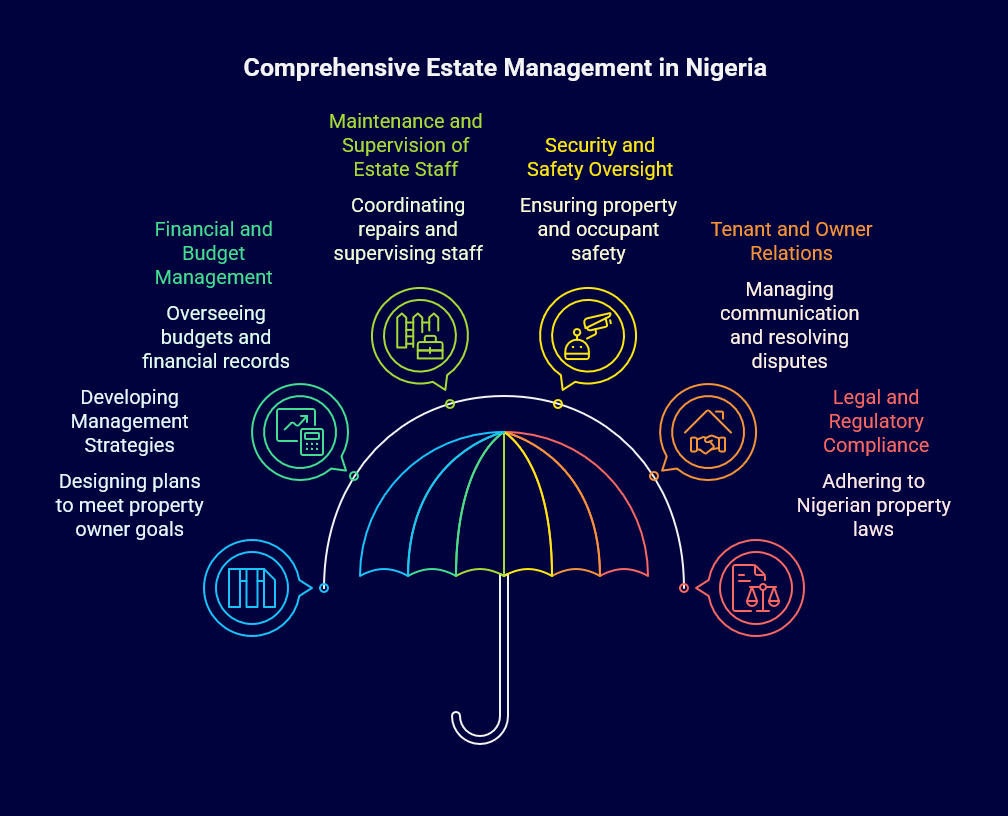
Estate managers in Nigeria take on a variety of tasks that combine strategic planning, financial management, and day-to-day supervision. Their work ensures that properties are profitable, safe, and efficiently maintained.
Developing Management Strategies
An estate manager begins by understanding the goals of the property owner. From there, they design and implement strategies that guide how the estate is managed. This includes setting performance targets, maintenance schedules, and long-term development plans.
Financial and Budget Management
Managing money is central to estate management. Estate managers prepare budgets, monitor cash flow, and keep financial records. They also oversee rent collection, expense tracking, and prepare periodic reports to help property owners understand their income and costs.
Maintenance and Supervision of Estate Staff
Properties require constant attention to remain in good condition. Estate managers coordinate repairs, schedule maintenance activities, and supervise gardeners, cleaners, security personnel, and technical staff. They ensure that every task meets quality and safety standards.
Security and Safety Oversight
Protecting the property and its occupants is a top priority. Estate managers organize security systems, emergency plans, and safety inspections. They work to prevent hazards and ensure that the environment remains secure and well-managed.
Tenant and Owner Relations
An estate manager serves as a bridge between property owners and tenants. They handle communication, resolve disputes, and make sure that tenancy agreements are respected. Clear communication keeps both parties satisfied and helps maintain long-term occupancy.
Legal and Regulatory Compliance
Estate managers ensure that all operations comply with Nigerian laws governing property ownership, health, safety, and tenancy. They stay informed about local policies and regulatory changes that could affect the estate’s operation or value.
The Importance of Estate Management in Building Projects
Before you even think of pouring that first bucket of cement, there is one silent player that determines the success of every building project: estate management. It is the system that ensures your property is legally secure, financially viable, and properly planned for the future.
In Ogun State, where land values and zoning regulations are constantly changing, effective estate management is not optional. It is the difference between a wise investment and a costly mistake.
A professional estate manager helps you understand the true value of your land. They assess factors such as location, market trends, accessibility, and long-term development plans. With this information, you can make better decisions about how and when to build.
Estate management also helps prevent land disputes and boundary issues that could delay or derail your project. When combined with the expertise of a professional land surveyor, it gives your project a solid foundation—legally, financially, and strategically.
In short, estate management protects your dream from hidden risks and ensures that your property remains valuable for years to come.
Career Opportunities and Professional Growth in Estate Management
Estate management is one of those careers that never goes out of demand. As long as people buy, sell, or develop property, there will always be a need for professionals who understand how to manage, value, and maximize land and buildings.
In Ogun State, where real estate is rapidly expanding due to urban growth and infrastructure projects, estate managers play an increasingly important role. They work with property developers, government agencies, and private investors to ensure that land and housing projects are well-planned, properly valued, and legally compliant.
Career paths in estate management are wide and flexible. Professionals can specialize in property valuation, facility management, real estate investment, urban planning, or housing policy. Others choose to start their own consulting firms, helping individuals and businesses make smarter land and property decisions.
The field also offers strong professional growth. With certifications and experience, an estate manager can move into leadership roles, manage large real estate portfolios, or advise on policy at the state and national levels. The Nigerian Institution of Estate Surveyors and Valuers (NIESV) provides training and accreditation that help professionals stay relevant and competitive.
At its core, estate management is more than a job—it is a career that combines business insight, legal understanding, and community development. It offers not just stability but also the satisfaction of shaping spaces where people live, work, and thrive.
Conclusion
Estate management in Nigeria ensures that land and buildings remain useful, legally safe, and financially productive. It combines valuation, development oversight, rental and facilities management, legal compliance, and sustainability planning to protect and grow property value. Skilled estate managers help owners and investors make informed decisions, reduce risks, and keep properties operating smoothly.
Across cities and rural areas, effective estate management supports stable rental income, prevents costly disputes, and promotes responsible development. For property owners and investors, it turns real estate into a lasting, manageable asset. For professionals and students, it offers a dynamic career that bridges law, business, construction, and urban planning.
If you own property or plan to develop land, consider consulting a qualified estate manager like hmdlimited for valuation, compliance checks, and a management plan that protects your investment. If you are exploring a career in the field, look into certification and training from recognized bodies like NIESV to build credibility and open professional opportunities.